
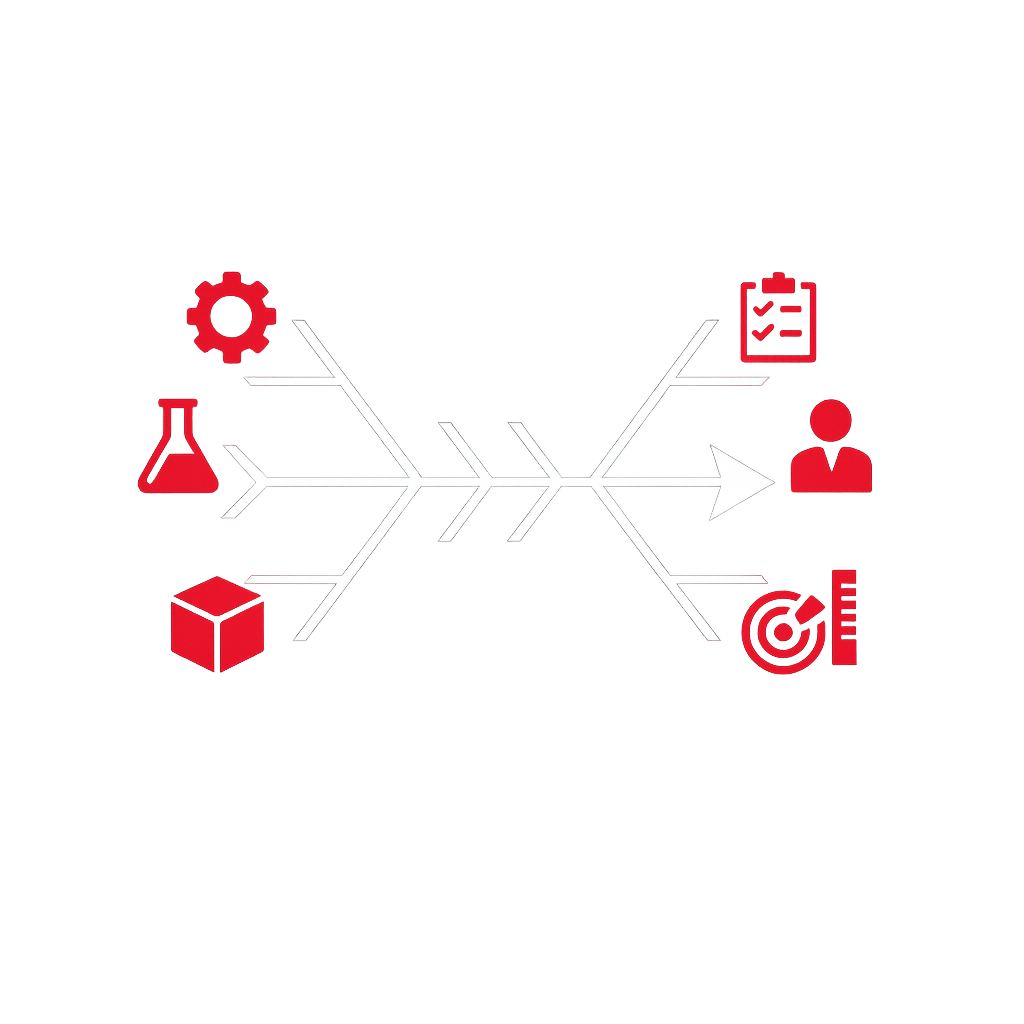
“When a problem repeats, sort causes into simple buckets. Clear structure turns confusion into focused action.”
Ishikawa’s 5M is a practical cause analysis framework used to identify the main sources of a problem in a structured way. It helps teams move beyond symptoms and explore root causes by grouping possible contributing factors into five categories. This method is widely used to improve processes, reduce defects, strengthen decision-making, and support continuous improvement.
The approach is often associated with the cause-and-effect diagram, also known as the fishbone diagram, developed by Kaoru Ishikawa. The idea is simple: when an issue appears, instead of jumping to conclusions, the team examines the problem from several consistent angles. This reduces bias, improves collaboration, and makes corrective actions more effective.
What the 5M stands for
- Man: the people involved in the process. This includes skills, training, communication, attention, workload, motivation, or human error.
- Machine: the tools, equipment, systems, or technology used. Problems may come from breakdowns, poor maintenance, incorrect settings, or unsuitable tools.
- Method: the way the work is done. This covers procedures, workflows, standards, instructions, controls, and sequencing of activities.
- Material: the inputs used to produce the output. Defects, inconsistency, poor quality, wrong specifications, or lack of availability can all create issues.
- Measurement: the way performance or quality is assessed. Inaccurate data, weak indicators, poor calibration, or incomplete reporting can hide the real problem or create wrong conclusions.
Some organizations adapt the categories depending on the context, but the core value remains the same: provide a complete and disciplined way to investigate causes before deciding on actions.
Why this method is useful
Many problems appear complex because causes are mixed together. The 5M framework creates order. It supports teams in workshops, incident reviews, quality investigations, service improvement initiatives, and operational problem-solving sessions. By separating causes into categories, it becomes easier to:
- identify root causes instead of treating symptoms
- improve cross-functional discussion
- detect gaps in process design or execution
- prioritize corrective and preventive actions
- document analysis in a reusable format
It is especially useful when several departments are involved, because each category invites a different perspective. A recurring issue may not come from people alone; it may also come from unclear procedures, poor tools, weak data, or inconsistent inputs.
How to use it effectively
- Define the problem clearly: describe the issue in specific terms, based on facts and observable impact.
- Draw the cause structure: place the problem at the head and use the five categories as main branches.
- Brainstorm possible causes: ask what in each category could contribute to the issue.
- Validate with evidence: distinguish assumptions from verified causes using data, observation, or direct review.
- Prioritize actions: focus on the causes that have the strongest impact and can realistically be addressed.
- Monitor results: confirm whether the actions reduce or eliminate the problem over time.
The quality of the result depends on discipline. If the exercise is done too quickly, teams may list generic causes without proving them. The method works best when supported by data, direct observation, and input from the people closest to the process.
Example in practice
Imagine a service team facing repeated delays in delivering customer requests.
- Man: new team members are not fully trained.
- Machine: the ticketing tool is slow during peak hours.
- Method: approval steps are unclear and vary by manager.
- Material: incoming requests often lack complete information.
- Measurement: the team tracks volume but not rework or waiting time.
Without structure, the team might blame workload alone. With the 5M view, it becomes clear that the issue is systemic and requires several targeted improvements rather than one isolated action.
Common mistakes to avoid
- starting with a preferred explanation and forcing all discussion toward it
- confusing symptoms with causes
- listing vague items such as “bad process” or “human error” without detail
- ignoring evidence and relying only on opinions
- failing to turn analysis into concrete actions and follow-up
Used well, Ishikawa’s 5M is not just a diagnostic tool. It is a shared language for examining issues with rigor, improving teamwork, and building more reliable operations.