
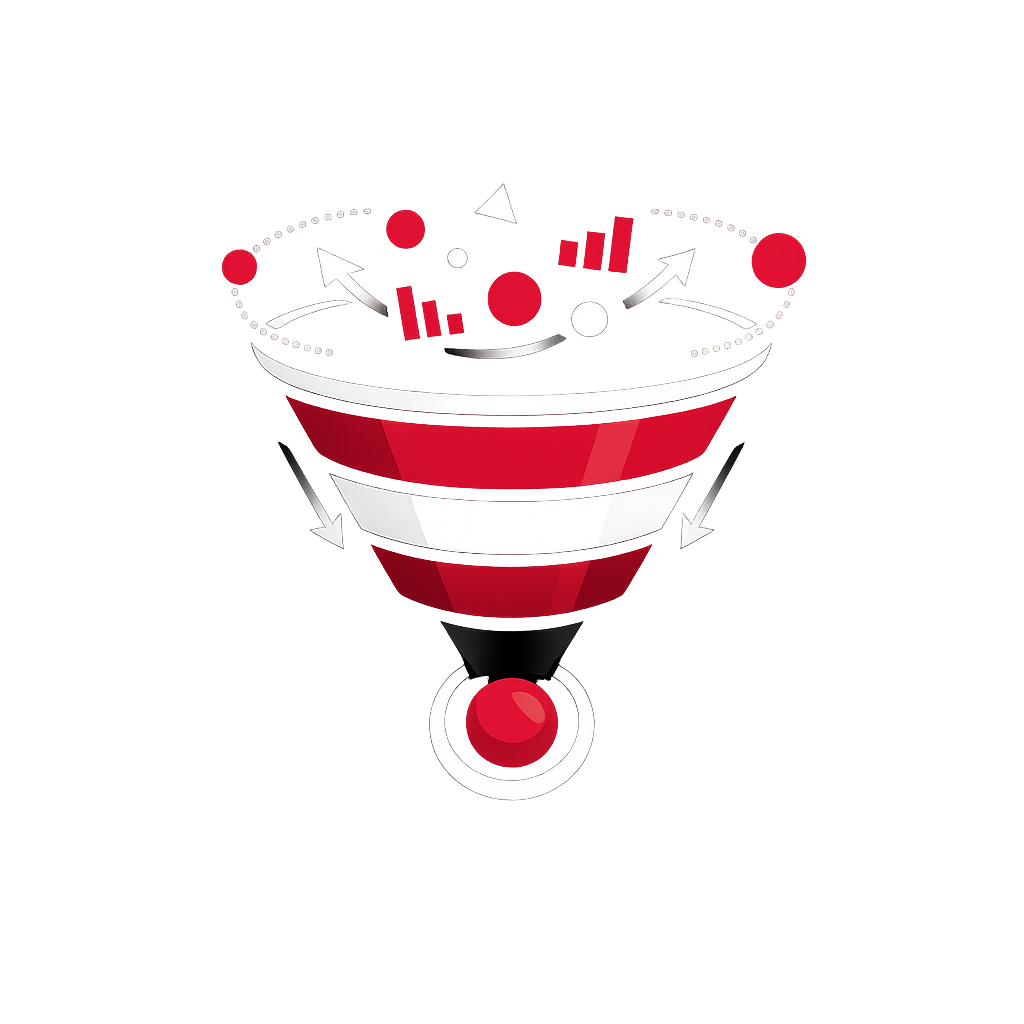
“Turn awareness into action: understand how people move from discovery to loyalty, and improve each step.”
The brand funnel is a model used to understand how people progress from first noticing an offer to becoming regular customers and advocates. It helps explain the stages through which attention, interest, evaluation, purchase, and loyalty are built over time. Rather than seeing growth as a single event, it presents brand development as a sequence of measurable steps that influence business performance.
This concept is useful because many organizations know how many sales they make, but not always why some people never move forward after first contact. The funnel provides a structured way to identify where people drop off, where trust is built, and where stronger engagement can improve outcomes.
What it stands for
The term refers to the progressive narrowing of a broad audience into a smaller group of committed customers. At the top, many people may become aware of a name, message, or offer. At the middle, a smaller group begins to consider it seriously. At the bottom, an even smaller segment takes action, returns, and may recommend it to others. The funnel shape reflects this reduction in numbers across stages.
Although versions differ by organization, the brand funnel often includes stages such as:
- Awareness: people recognize the brand or have heard of it.
- Consideration: people start comparing it with alternatives.
- Preference: people begin to favor it over competitors.
- Purchase: people decide to buy or subscribe.
- Loyalty: people return, stay engaged, or buy again.
- Advocacy: people recommend it to others.
Why it matters
The brand funnel connects perception and behavior. A strong reputation alone does not guarantee adoption, and a good product alone does not guarantee loyalty. Each stage depends on different factors such as visibility, clarity, credibility, usability, customer experience, and ongoing value.
By studying the funnel, teams can answer practical questions:
- Are enough people aware of the brand?
- Do people understand what makes it relevant?
- Are there barriers that prevent decision-making?
- Does the experience after purchase encourage retention?
- Are satisfied customers motivated to recommend it?
How it is used in practice
The funnel supports decision-making by linking customer behavior to specific improvement opportunities. If awareness is high but purchase is low, the issue may not be visibility but trust, positioning, pricing, or experience. If purchase is strong but loyalty is weak, the challenge may come after the initial transaction.
Typical uses include:
- evaluating the effectiveness of communication efforts
- comparing audience behavior across segments or regions
- identifying friction points in the customer journey
- aligning teams around common performance indicators
- prioritizing investments based on where conversion is weakest
A simple example
Imagine 10,000 people see a message. Out of them, 4,000 remember the brand, 1,500 explore it further, 500 seriously compare it, 200 make a first purchase, and 60 become repeat customers. This does not mean the funnel is failing. It means each stage can be analyzed to understand what improves progression from one level to the next.
In this example, the organization may decide to improve explanation of value in the middle stages, simplify the purchase process, or strengthen the onboarding experience after the first transaction.
Common measurements
Organizations often track indicators such as:
- unaided and aided awareness
- consideration rate
- purchase intent
- conversion rate
- repeat purchase rate
- retention rate
- recommendation or referral behavior
These measures help transform a general idea into actionable insight. The goal is not only to observe volume at each stage, but also to understand the reasons behind movement or stagnation.
Strengths of the model
- It simplifies complex customer behavior into understandable stages.
- It helps reveal where improvement efforts should be focused.
- It creates a shared language across teams.
- It supports better allocation of time and budget.
Limits to keep in mind
The brand funnel is helpful, but it should not be treated as a perfect reflection of reality. Real customer behavior is rarely linear. People may skip stages, return to earlier ones, or be influenced by peers, reviews, communities, and external events. In some sectors, loyalty may come quickly; in others, evaluation can take months.
It is therefore best used as a guiding framework rather than a rigid rule. Combining it with customer feedback, behavior data, and service insights gives a more accurate view.
Good practices
- Define each stage clearly and consistently.
- Use both quantitative and qualitative evidence.
- Review the funnel regularly, not only after campaigns.
- Look beyond acquisition and pay attention to retention.
- Adapt the model to the buying reality of your audience.
Final thought
The brand funnel remains a practical way to understand how recognition becomes trust, how trust becomes action, and how action becomes lasting value. When used carefully, it helps teams move from assumptions to evidence and improve the full path from first impression to long-term relationship.
References
Wikipedia – Purchase funnel
Britannica – Marketing funnel
Investopedia – Sales Funnel: What It Is, How It Works, and How to Create One