
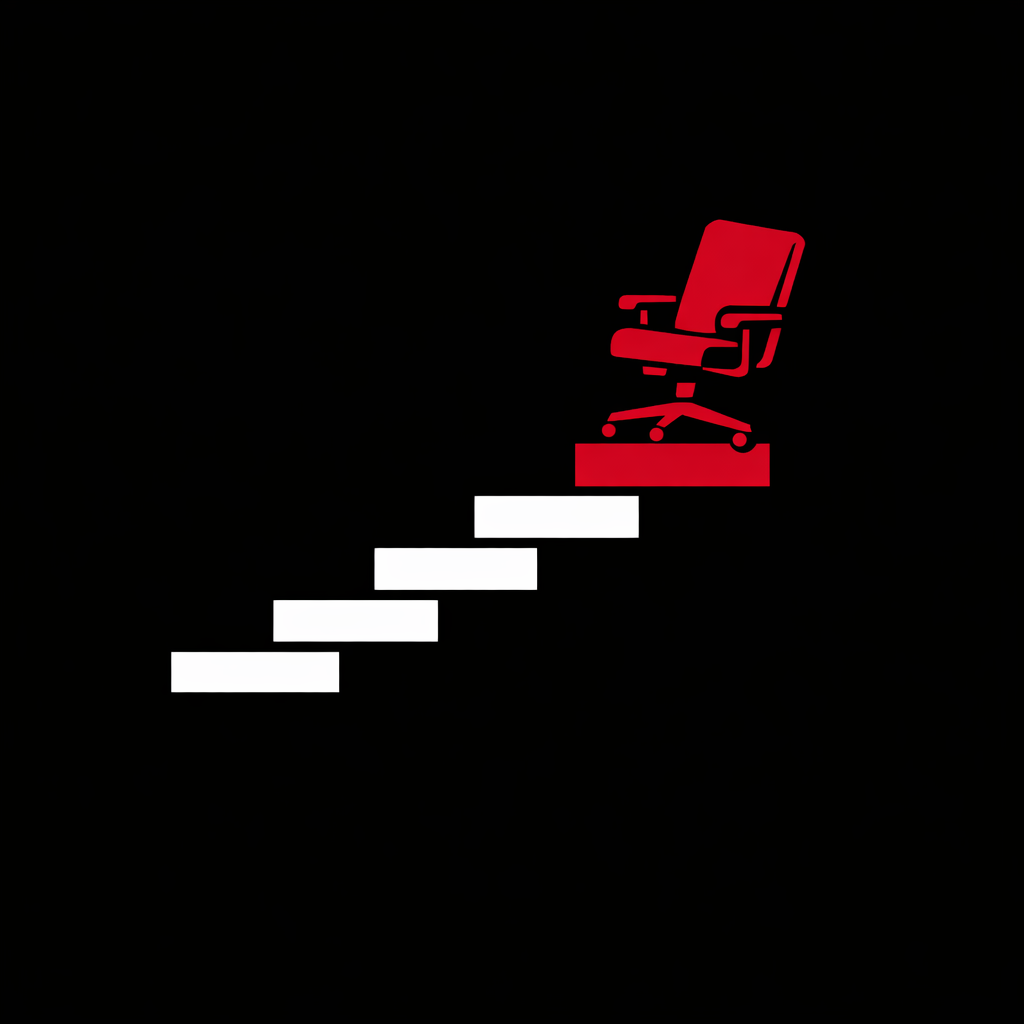
“People are often promoted for past success, not future fit. Growth needs competence, support, and clear role design.”
The Peter Principle describes a recurring pattern in organizations: people who perform well in their current role are promoted until they reach a position where they are no longer effective. In other words, success in one job does not automatically guarantee success in the next level of responsibility.
This idea is especially relevant in environments where performance, expertise, coordination, and decision-making must align across multiple roles. A strong specialist may become a weak manager. A reliable coordinator may struggle in a strategic leadership position. The principle highlights a structural risk in promotion systems that reward current achievement without fully assessing the capabilities required for the next role.
What it stands for
The concept stands for the observation that hierarchical organizations can unintentionally place employees into roles that exceed their actual strengths. Promotions are often based on visible results, technical expertise, loyalty, or tenure. However, higher positions may require very different skills such as leadership, delegation, conflict handling, prioritization, communication, and long-term thinking.
The central message is not that people are incapable of growth. Rather, it shows that organizations must distinguish between performance in a current role and readiness for a different role. Without that distinction, businesses risk reducing effectiveness at both the individual and organizational level.
Why this happens
- Promotion based on technical excellence: High performers are often rewarded with managerial roles, even when management requires a different profile.
- Lack of alternative career paths: Organizations may offer promotion as the main way to recognize contribution, instead of creating expert or specialist tracks.
- Insufficient assessment: Future role requirements are not always evaluated with enough depth before promotion decisions are made.
- Limited transition support: Newly promoted employees may receive responsibility without coaching, training, or mentoring.
- Cultural assumptions: Some workplaces assume that success naturally scales upward across all levels of hierarchy.
Practical consequences
When this pattern appears, the effects can spread beyond one individual. Teams may face slower decisions, unclear priorities, reduced trust, weaker execution, or lower engagement. Projects can suffer when roles are filled by people who were excellent contributors but are not prepared for broader leadership demands.
This also affects morale. Employees may feel trapped in positions that do not suit them, while organizations lose the value they once had in the person’s previous role. In some cases, the issue is not low capability overall, but a mismatch between the person and the responsibilities attached to the position.
Why it matters for modern organizations
In technology, project environments, product organizations, and business transformation initiatives, role fit is critical. Many positions now require a combination of expertise, adaptability, communication, and influence across functions. Promotion decisions based only on past delivery can create bottlenecks, especially where leadership depends on guiding people rather than directly doing the work.
The principle is also important in change management and collaboration-heavy contexts. As responsibilities become more cross-functional, the ability to align people, create clarity, and support execution becomes as important as domain knowledge.
How to reduce the risk
- Assess future-role capabilities: Evaluate leadership, communication, judgment, and decision-making before promotion.
- Create dual career paths: Allow experts to grow in status and compensation without forcing a move into people management.
- Use trial responsibilities: Temporary leadership assignments can reveal readiness before a permanent promotion.
- Provide onboarding for new roles: Coaching, mentoring, and training improve the transition into positions with broader scope.
- Review role design: Make sure expectations are realistic and aligned with the capabilities required for success.
- Normalize development over status: Encourage career growth that matches strengths instead of treating hierarchy as the only measure of progress.
A balanced perspective
The Peter Principle should not be read as a cynical rule that all promotion leads to failure. It is a caution about poorly designed advancement systems. People can absolutely grow into larger roles when they receive the right preparation, feedback, and support. The value of the concept lies in encouraging better organizational decisions, not in limiting ambition.
For leaders and managers, this means asking a better question: not only Who performed best here? but also Who is genuinely suited for what comes next? That shift improves both personal development and business performance.