
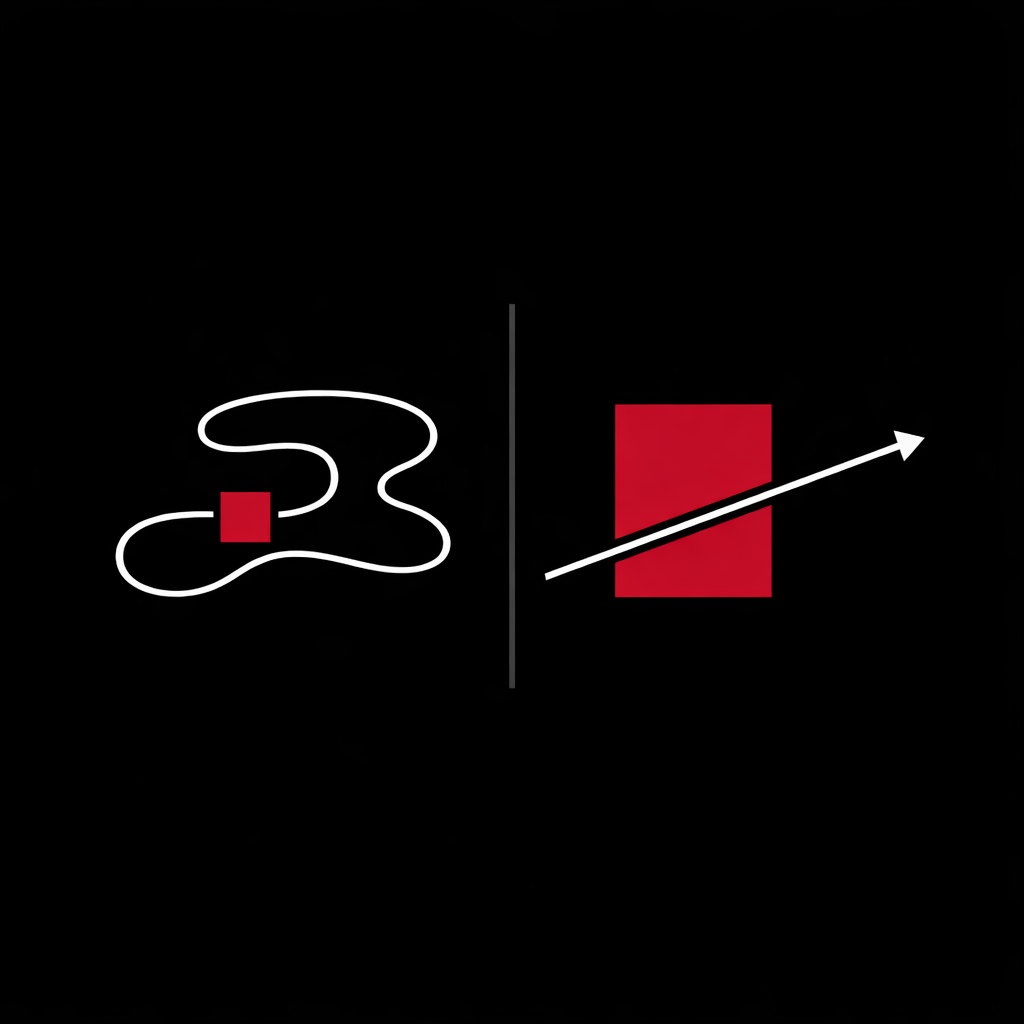
“When discomfort feels manageable, we often delay change longer than when things feel clearly unbearable.”
The region-beta paradox describes a counterintuitive pattern in human behavior: people sometimes recover faster from a more intense negative situation than from a milder one. The reason is not that severe pain is easier, but that it is more likely to trigger a clear response. A strong problem creates urgency, forces a decision, and pushes action. A moderate problem, by contrast, can remain tolerable for too long, which delays adaptation, help-seeking, or change.
This idea is useful in personal development, management, product decisions, organizational change, and business operations. Many teams do not stay stuck because a problem is invisible. They stay stuck because the problem is inconvenient but still bearable. As long as the discomfort remains within an acceptable range, people often postpone action, hoping the issue will resolve itself or believing it is not yet serious enough to justify the effort of intervention.
What it stands for
The concept stands for a simple but powerful insight: milder setbacks can produce longer suffering than severe setbacks when they fail to activate a response. In practice, this means that the threshold for action matters as much as the severity of the issue itself.
A severe event often leads to immediate coping behavior:
- a failing project is escalated quickly,
- a toxic process is redesigned,
- a bad customer experience is finally addressed,
- an unhealthy work pattern is abandoned.
A less severe version of the same issue may persist for months or years because it does not appear urgent enough. The paradox lies in the fact that the less painful situation can sometimes create more total damage over time.
Why it matters in organizations
In business and technology environments, many persistent inefficiencies live in this “moderate pain zone.” Examples include:
- meetings that waste time but are not disastrous enough to cancel,
- legacy tools that frustrate users but still function,
- unclear roles that create tension but not open conflict,
- slow approval flows that reduce speed but do not stop delivery,
- technical debt that increases risk gradually rather than dramatically.
Because these issues remain survivable, they rarely receive focused attention. Teams adapt around them. Managers normalize them. Stakeholders accept them as “just how things work.” Over time, however, the cumulative cost can be substantial: lower engagement, slower execution, reduced innovation, hidden stress, and missed opportunities.
Applications in personal development
The same logic applies at an individual level. People often change only when a situation becomes undeniably painful. Before that point, they may rationalize, delay, or remain passive. This can affect:
- career decisions,
- work-life balance,
- learning habits,
- health routines,
- relationships at work.
A person may remain in a role that is only somewhat misaligned, in a schedule that is only somewhat exhausting, or with habits that are only somewhat ineffective. Since the pain is not extreme, the motivation to act stays weak. Once the discomfort becomes undeniable, change may happen quickly. The paradox explains why moderate dissatisfaction can be more sticky than severe dissatisfaction.
Practical examples
Project management
A project that is visibly failing often receives executive attention, scope clarification, and a recovery plan. A project that is only slightly delayed may drift for much longer, consuming more energy overall.
Change management
When resistance to change is intense, leaders tend to communicate more clearly and support adoption more actively. When resistance is mild, they may underestimate it, and the change initiative loses momentum quietly.
Product management
If customers strongly reject a feature, teams respond. If customers are merely confused or mildly dissatisfied, the issue may survive release after release, weakening adoption without creating a dramatic alarm.
Collaboration
A serious conflict forces mediation. Low-grade friction often remains unresolved, reducing trust and slowing cooperation over time.
How to use this concept effectively
This concept is especially valuable as a decision aid. It encourages leaders and professionals to examine not only what is broken, but also what is just acceptable enough to avoid being fixed.
- Identify tolerated inefficiencies: look for recurring frustrations that nobody owns.
- Measure cumulative cost: small delays and minor quality issues often create large aggregate losses.
- Lower the action threshold: do not wait for a crisis before improving a process or behavior.
- Design earlier interventions: create review points, feedback loops, and escalation criteria.
- Challenge normalization: ask whether a persistent annoyance has simply become culturally accepted.
Limits of the idea
The region-beta paradox is not a universal law that applies mechanically in every case. Some severe situations cause lasting harm and do not lead to faster recovery. The value of the concept lies in helping explain a common behavioral tendency: people often act only when pain crosses a visible threshold. It is therefore best used as a thinking tool, especially when analyzing delay, inertia, and adaptation.
Why this matters for better management
Good management is not only about responding well to crises. It is also about recognizing when moderate discomfort is silently damaging performance, motivation, or value creation. Teams improve faster when they do not confuse “still functioning” with “working well.”
The core lesson is simple: bearable problems are often the ones that last the longest. Seeing them clearly allows earlier action, better decisions, and healthier systems.
References